
Creating a dedicated workspace at home does not always require a costly renovation or a room addition. For homeowners looking to separate work from everyday life, a backyard office shed offers a practical alternative. Among the available sizes, a 10×12 shed provides 120 square feet of floor space, making it an appealing option for a home office, creative studio, or quiet retreat. Its size also falls within a common permit-exemption threshold in many US jurisdictions, although local requirements vary.
For homeowners exploring sheds for a more functional backyard, understanding the relationship between shed dimensions, building permits, and workspace design is an important first step.
Why 120 Square Feet Is a Practical Size for a Backyard Office
A backyard office needs enough room for a desk, an office chair, storage, and comfortable movement without occupying too much outdoor space. A 10×12 shed strikes a useful balance between functionality and footprint.
With approximately 120 square feet of floor area, the interior can accommodate a workstation along one wall, shelving or cabinets along another, and enough open space to move around comfortably. Depending on the layout, homeowners can also include a compact lounge chair, a printer station, or storage for work supplies.
Compared with a smaller garden shed, a 10×12 model offers greater flexibility for daily work. Compared with a larger outbuilding, it may be easier to fit into an existing backyard while preserving room for gardening, outdoor dining, and recreation.
This combination makes the 10×12 shed an attractive choice for remote workers, freelancers, and small-business owners who want a dedicated workspace without expanding the main house.
Does a 10×12 Shed Qualify for a 120 Sq. Ft. Permit Exemption?
The 120-square-foot threshold is an important consideration when planning a backyard structure. Some US cities and counties exempt qualifying, detached, single-story sheds of this size from building permits. However, a 120-square-foot exemption is not a nationwide rule, and it does not automatically authorize a backyard office.
For example, Boulder, Colorado, generally exempts certain detached residential sheds measuring no more than 120 square feet, provided they are no taller than 10 feet and have no utilities. Santa Cruz County, California, also has a 120-square-foot exemption for qualifying accessory structures, subject to its specific conditions.
The intended use matters just as much as the dimensions. Some jurisdictions limit exemptions to storage sheds, playhouses, and similar structures that are not designed for regular occupancy. Seattle, for instance, restricts its relevant shed exemption to uses such as storage and growing plants rather than occupied office space.
Before choosing a shed based on the 10×12 shed permit exemption, check your local building department’s rules. Confirm whether an occupied backyard office is permitted without a building permit, whether the structure’s roof footprint or floor area determines its size, and whether separate electrical, mechanical, or zoning approvals are necessary.
What to Check Before Building a Backyard Office Without a Permit
Even when a structure qualifies for a building permit exemption, other regulations may still apply. Property-line setbacks, maximum building height, lot coverage, easements, and neighborhood restrictions can affect where a shed may be installed. Some homeowners associations also have rules governing exterior appearance, placement, or accessory buildings.
Utilities are another important consideration. Running electrical wiring, installing heating or air conditioning, or adding plumbing may require separate permits. A shed that is exempt as a storage structure may also be treated differently when converted into a regularly occupied workspace.
For a smoother project, contact your local building or planning department before purchasing materials. Describe the intended use as a backyard office rather than simply a storage shed, and request confirmation of the applicable requirements. This step helps you avoid choosing a structure that meets the size limit but does not meet local occupancy or zoning rules.
Choosing a Shed Designed for Work and Everyday Comfort
Once the local requirements are clear, the next step is selecting a shed that supports regular use. A basic storage shed may be suitable for tools and garden supplies, but a backyard office needs additional attention to insulation, natural light, weather protection, security, and interior layout.
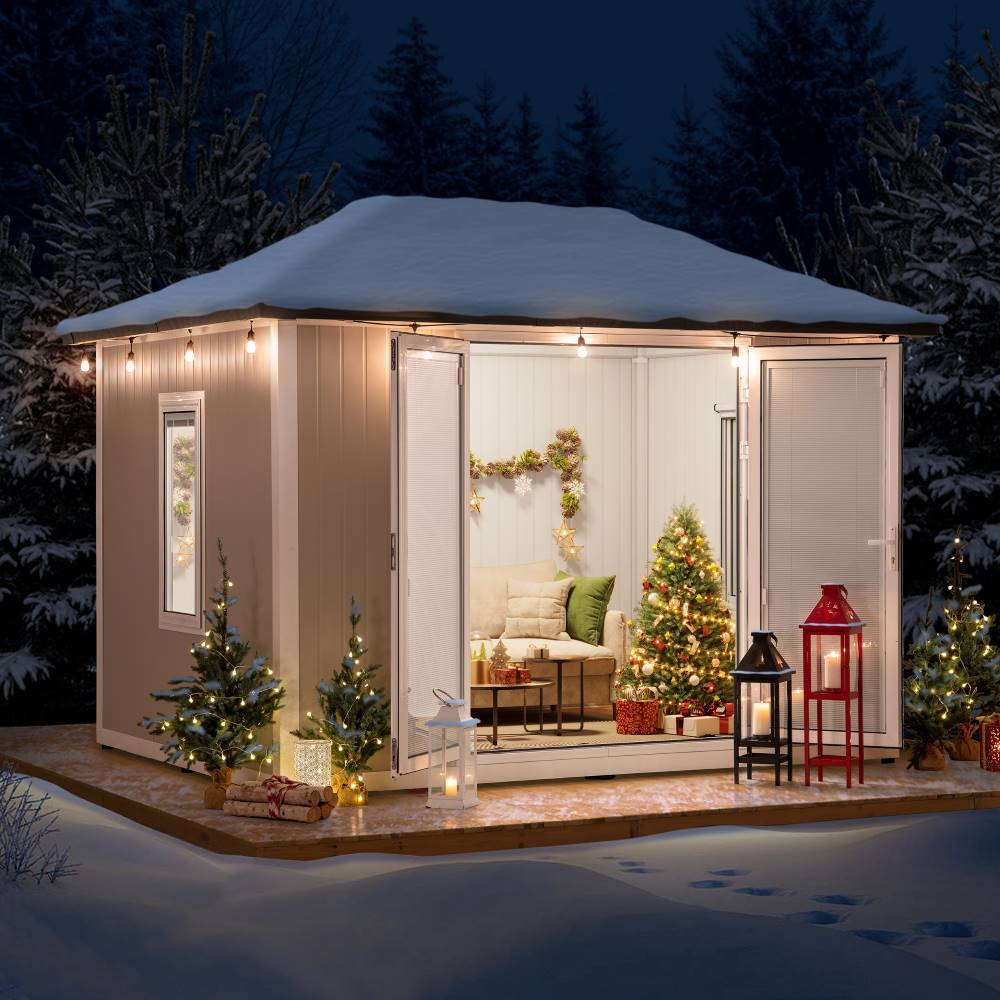
The SUNJOY Esquire Beyond Shed Outdoor Room is designed for flexible working and living. Measuring approximately 10 × 12.6 feet, it features insulated walls, a roof, doors, and windows, along with waterproof insulated flooring and double-pane windows with blinds. Its modular panels offer flexibility when planning the interior, while pre-panelized components simplify on-site assembly.
One important distinction remains: the Esquire Beyond Shed is listed at approximately 10 × 12.6 feet, so its nominal dimensions should not be assumed to meet a 120-square-foot exemption. Always verify the actual dimensions and the measurement method used by your local authority before purchasing.
Make Your Backyard Work Better for You
A 10×12 shed offers a practical balance of workspace, footprint, and versatility, making it worth considering for homeowners who want a dedicated office outside the main house. The 120-square-foot threshold can be a useful starting point when researching building permits, but the rules depend on location, intended use, utilities, and other site requirements.
By confirming local regulations first and choosing a shed suited to regular occupancy, homeowners can plan a more functional backyard workspace with fewer surprises. With SUNJOY‘s range of outdoor structures, creating a dedicated space for focused work, hobbies, or everyday flexibility starts with finding the right design for your needs.
