
Pump performance depends on more than the motor and piping. Drive selection affects starting behavior, speed adjustment, fault handling, and energy use. For procurement teams, a low quotation means little if the equipment cannot match site conditions.
Before purchasing a vfd for water pump systems, buyers should compare electrical ratings, control functions, technical documentation, and supplier support. The evaluation should begin with the pumping duty rather than a product catalogue.
Why Supplier Evaluation Starts with Pumping Requirements
Water supply, irrigation, and industrial transfer systems can have different operating schedules. Some pumps run continuously, while others respond to changing demand. Engineers should document required flow, pressure, motor ratings, and expected running hours before approaching suppliers.
These details provide a basis for comparing drive specifications. They also help buyers distinguish essential functions from features that may not be needed for a particular installation.
An experienced vfd manufacturer should be able to explain equipment limitations as clearly as its available functions. Buyers can ask for rated input and output data, permissible ambient conditions, wiring diagrams, and motor compatibility guidance.
Technical discussions should include the pump’s operating curve. Reducing motor speed changes both flow and pressure in centrifugal pumping systems. However, minimum flow limits and process requirements still need to be respected.
Electrical Compatibility and Control Requirements
The inverter must match the motor’s rated voltage and current. Engineers should also check supply voltage tolerance, output frequency range, overload requirements, and available cooling space. Motor cable length and installation layout may affect additional design decisions.
Control requirements vary by project. Constant-pressure water supply may require feedback from a pressure sensor. Irrigation systems may instead operate according to a schedule or available energy. Buyers should confirm supported control modes and external signal connections.
For projects considering a hybrid vfd, power-source compatibility needs separate verification. The term alone does not establish which solar, grid, or other input arrangements are supported. Procurement documents should identify the required source configuration and expected operating sequence.
Parameter access matters during commissioning. Clear instructions for acceleration, deceleration, motor settings, and fault reset procedures can reduce confusion for installation teams. Suppliers should explain which settings are adjustable and which require technical assistance.
How Protection Functions Affect Equipment Selection
Protection functions deserve more attention than a simple feature list. Over-current protection can respond to excessive current, while over-voltage protection addresses abnormal electrical conditions. Short-circuit protection and phase-loss detection provide additional fault monitoring.
Over-temperature protection is also relevant where ventilation is limited or ambient temperatures are high. Buyers should examine fault codes and shutdown behavior, rather than assuming protective functions eliminate the possibility of damage.
Protection performance depends partly on installation quality. Grounding, cable sizing, enclosure ventilation, and suitable protective devices remain necessary. Engineers should check whether the supplied manual describes these requirements in practical terms.
Fault recovery should be discussed before delivery. An automatic restart function, where available, may be unsuitable for certain processes without additional safeguards. Buyers should establish how operators will inspect faults and return the system to service.
Solar Pump Operation and Available Inverter Features
Solar pumping introduces a changing energy supply. Morning, cloud cover, and late afternoon can produce different available power levels. Drive behavior under weak sunlight therefore matters alongside operation during stronger solar input.
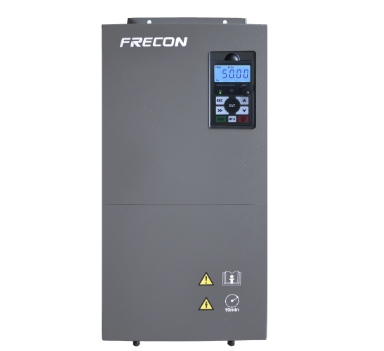
The PV600 Series Solar Pump Inverter from FRECON is presented with a larger water yield under the same conditions. Buyers should request the comparison conditions before using that claim in project calculations, including the pump, solar input, and operating period.
The series includes a dormancy and wake-up function, the inverter enters dormancy and wakes automatically based on sunshine intensity. This can be relevant when available sunlight changes during daily operation.
Its built-in protections cover over-current, over-voltage, phase loss, short circuit, and over-temperature conditions. These features offer useful points for technical comparison, but site-specific protection design still requires engineering review.
Manufacturing Documentation and Technical Support
Supplier assessment should cover the steps between purchase order and commissioning. Buyers can request inspection records, operating manuals, packing details, and a clear process for reporting faults. The requested evidence should correspond to the proposed model.
When comparing a vfd manufacturer, procurement teams should ask how product testing is documented and whether technical staff can clarify unusual installation conditions. Responses to specific engineering questions are more useful than broad claims about quality.
FRECON can be assessed through the same process. Its PV600 product information gives buyers a starting point for discussing solar pumping functions, while the final selection should depend on confirmed electrical and hydraulic requirements.
For a vfd for water pump project, buyers should also clarify warranty coverage, troubleshooting procedures, and replacement-part arrangements. These details affect maintenance planning, especially where equipment is installed far from service personnel.
Turning Technical Reviews into Purchasing Decisions
Final comparisons should use a consistent specification sheet. Each quotation can be checked against motor ratings, control needs, site conditions, protection functions, and documentation. Unconfirmed functions should remain open questions rather than assumed capabilities.
If a hybrid vfd is under consideration, the buyer should obtain written confirmation of supported power sources and operating modes. Purchasing teams should also compare commissioning support and fault-handling procedures before confirming an order. The final decision should reflect verified technical requirements, operating conditions, and the supplier’s ability to support the equipment after delivery.
