
Strong wind changes the way an outdoor shelter should be evaluated. Roof weight, frame geometry, anchoring, connection quality, and airflow all influence stability, so appearance alone cannot determine whether a structure suits an exposed property. Metal gazebo designs can provide a rigid overhead framework, while specifications such as wind ratings and anchoring methods deserve careful review. As a relevant example, SUNJOY offers hardtop structures designed around durable roofing systems and practical outdoor use.
Understand Wind Loads Before Choosing
Wind does not simply push against the walls. Air can move beneath the roof, around the posts, and across the upper panels, creating uplift and lateral forces. Open-sided shelters may experience different pressure patterns from enclosed structures, making the overall configuration important.
Roof shape can affect airflow as well. Broad, flat surfaces may experience substantial uplift during strong gusts, while carefully designed profiles can help redirect moving air. Neither shape should be judged in isolation, since frame construction and installation also affect performance.
Local conditions provide another useful reference point. Coastal properties, open fields, elevated yards, and locations near large bodies of water may experience stronger or more frequent gusts than sheltered suburban gardens. Regional building guidance and manufacturer specifications should therefore be checked before installation.
Why Metal Roofing Works Well In Exposed Spaces
Metal offers useful structural characteristics for outdoor shelters. Steel panels can provide a firm overhead surface while resisting many forms of routine weather exposure. Protective coatings can also help limit corrosion caused by moisture and humidity.
Weight distribution matters just as much as material strength. Roof panels transfer loads into beams and posts, which then pass forces toward the anchors and foundation. Weakness at any connection can affect the behavior of the entire shelter during severe weather.
Durability should not be confused with immunity from damage. Falling branches, unusually strong storms, and improper installation can affect even robust structures. Regular checks of fasteners, joints, roof panels, and anchor points remain worthwhile throughout the year.
Features That Support Better Weather Performance
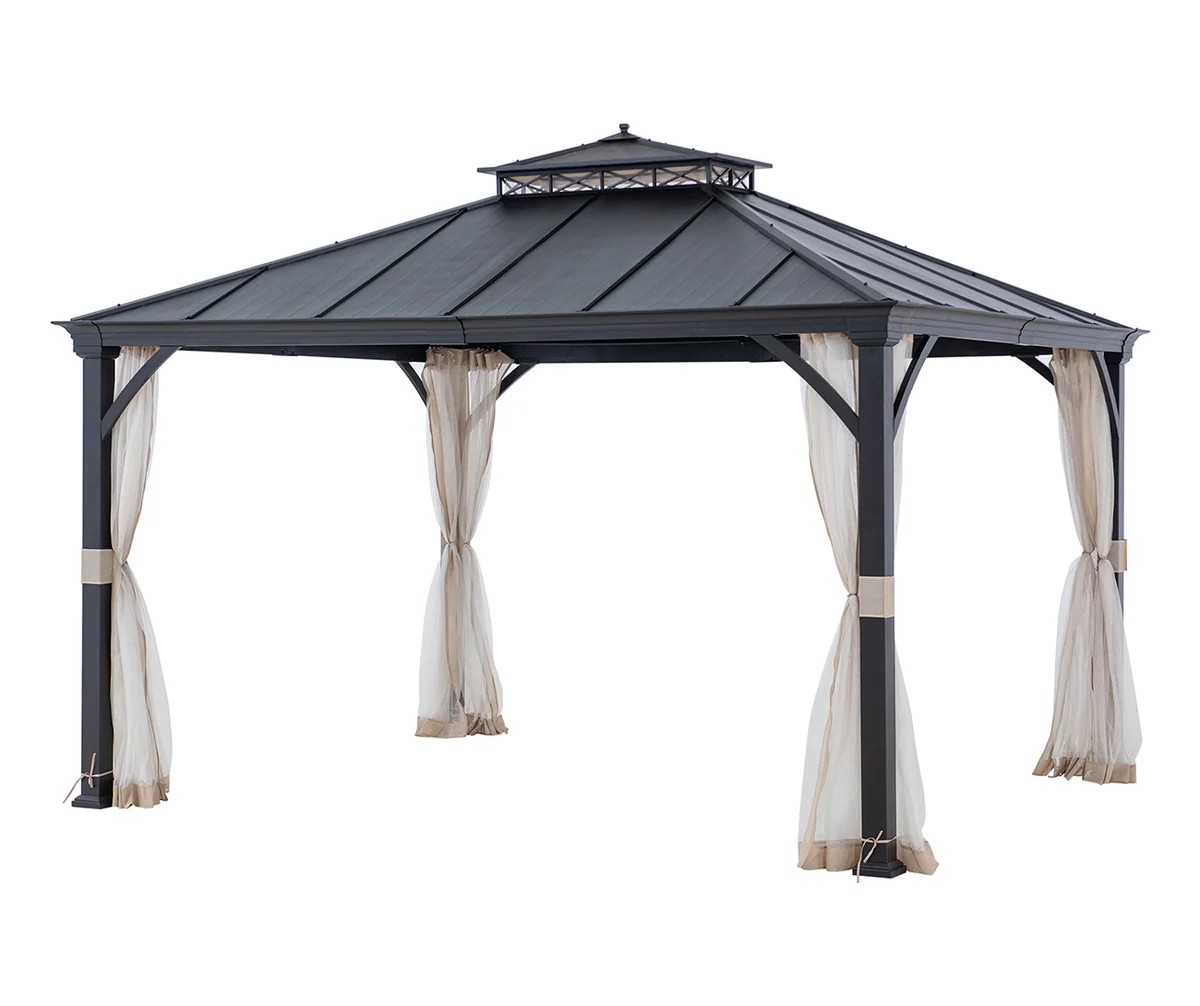
Roof configuration deserves close attention during comparison. The SUNJOY Crown Lattice Hardtop Patio Gazebo 11′ × 13′, Matte Black, uses a two-tier roof that blocks 99.9% of UV rays while creating an opening that helps release accumulated heat. Its 2-tier roof is designed to promote rain and snow runoff while allowing heat to vent through the upper opening.
Ventilation becomes particularly valuable during hot weather. A roof that blocks sunlight but permits warm air to escape can create a more comfortable environment beneath the shelter. Two-tier construction can therefore serve a functional purpose beyond visual appeal.
Snow and rain introduce different loading concerns. Sloped roof surfaces can encourage precipitation to move away from the upper structure, while accumulated snow may still require attention in colder climates. Local snowfall conditions should always be compared with the stated structural specifications.
Anchoring And Installation Matter
Even strong roofing materials depend on secure connections with the ground. Anchoring plates, suitable fasteners, and a stable foundation help transfer wind forces away from the upper frame. Installation should follow the manufacturer’s instructions rather than relying on assumptions based solely on appearance.
Surface conditions can influence stability too. Concrete, pavers, soil, and composite decking have different fastening requirements. A suitable anchoring method should match the supporting surface and the structural requirements of the shelter.
Positioning provides another layer of protection. Placing the structure near existing buildings or landscape features may reduce direct exposure to prevailing winds, although surrounding objects can also create turbulence. Careful consideration of prevailing wind direction is therefore useful before selecting the final location.
How To Compare High-Wind Gazebo Options
Shopping decisions become clearer when specifications are examined as a group rather than individually. Frame material, roof construction, dimensions, anchoring hardware, connection methods, and published wind ratings should all be reviewed. A visually substantial roof does not automatically indicate stronger wind performance.
For hardtop gazebos, a 50 MPH wind rating serves as a useful benchmark—it indicates that the structure has been engineered to withstand gusts at that speed when properly anchored. This figure provides a more reliable reference than visual impressions alone, particularly when comparing models across different brands.
Maintenance requirements also belong in the comparison. Coated metal surfaces may need periodic inspection for scratches or corrosion, while loose hardware should be tightened according to manufacturer guidance. Severe storms provide a good reason to inspect the entire structure afterward.
Long-term suitability depends on the relationship between the structure and its environment. Gazebos with metal roofs can provide durable overhead coverage, but installation quality and local weather conditions remain central to performance. Selecting a suitable design means considering the complete system rather than focusing on one material.
Conclusion
High-wind locations call for a more technical approach to outdoor shelter selection. Metal gazebo construction can offer useful rigidity and weather resistance, yet anchoring, roof geometry, frame connections, and site conditions deserve equal consideration. Gazebos with metal roofs may be particularly practical where year-round overhead coverage is preferred, provided the chosen structure matches local wind and snow conditions. Specifications should be reviewed carefully, installation should follow the supplied guidance, and inspections should remain part of routine ownership. With these factors considered together, SUNJOY structures can become a practical option for outdoor spaces exposed to demanding weather.
